
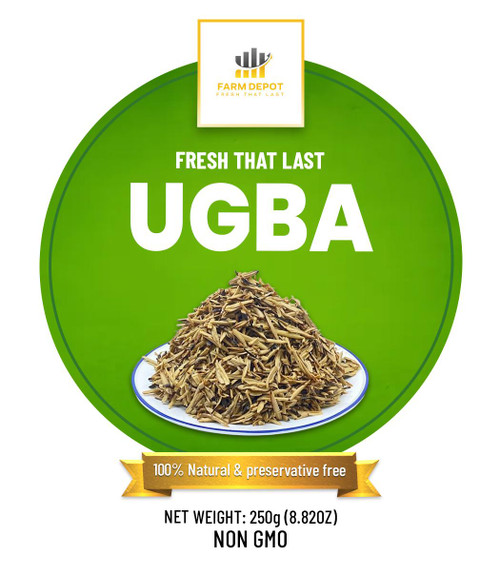
UGBA (Fermented African Oil Bean Seeds)
Our Authentic Ugba is carefully processed to ensure microbiological safety while preserving the authentic taste. The product appears as dark brown, soft, sliced cotyledons with a distinctive aroma and slightly tangy flavor. It is typically served as a native salad with palm oil, pepper, and spices, or used to flavor traditional soups like Ofe Ugba.
Nutritional Components (Per 100g dry fermented ugba)
Energy: ~450-500 kcal
(High energy food)
Protein: 17-22% (Complete amino acid profile)
Fat/Oil: 44-47% (75% saturated, 25% unsaturated)
Carbohydrates: 4-17%
(Variable by processing)
Ash: 2-3% (Mineral content)
Crude Fiber: 2-3% (Digestive health)
Amino Nitrogen: 13.68 mg/Ng-1 DM
(Increases during fermentation)
Essential Amino Acids: All 20 present
(Complete protein source)
Major Fatty Acids: Linoleic (42.8%), Oleic (29%) (Heart-healthy unsaturates)
Calcium: 110-192 mg
(Bone health)
Iron: 3.3-16 mg
(Blood health)
Phosphorus: 172-351 mg (Energy metabolism)
Potassium: 110-175 mg
(Heart function)
Magnesium: 292-479 mg
(Muscle/nerve function)
Zinc: 9-15 mg
(Immune support)
Manganese: 15-27 mg
(Antioxidant function)
Thiamin (B1): 0.07 mg
(Energy metabolism)
Riboflavin (B2): 0.30 mg
(Cell health)
Niacin (B3): 0.30 mg
(Brain function)
Key Benefits: Fermentation reduces anti-nutritional factors (tannins, saponins, phytates, alkaloids) by 50-90%, making nutrients more bioavailable. Rich in complete protein with all essential amino acids. High in beneficial fatty acids including linoleic acid. Contains significant minerals including magnesium, potassium, and iron. Natural fermentation creates beneficial peptides and enhances flavor through glutamic acid development.
Storage Instructions
Fresh/Wet Ugba: Highly perishable—refrigerate immediately at 4°C or below
Shelf life (fresh): 3-7 days refrigerated; consume quickly due to active fermentation
Dried Ugba: Store in airtight containers in a cool, dry place
Shelf life (dried): 3-6 months when properly dried and stored
Critical: Keep moisture-free to prevent mold growth (Aspergillus, Penicillium common contaminants)
Temperature: Store below 25°C; higher temperatures accelerate spoilage
Packaging: Use vacuum-sealed or nitrogen-flushed packaging for extended shelf life
Signs of spoilage: Slimy texture, off-odors (beyond characteristic fermented smell), visible mold—discard immediately
Food safety: Ensure pH remains above 8.0 (alkaline) to inhibit pathogenic bacteria

