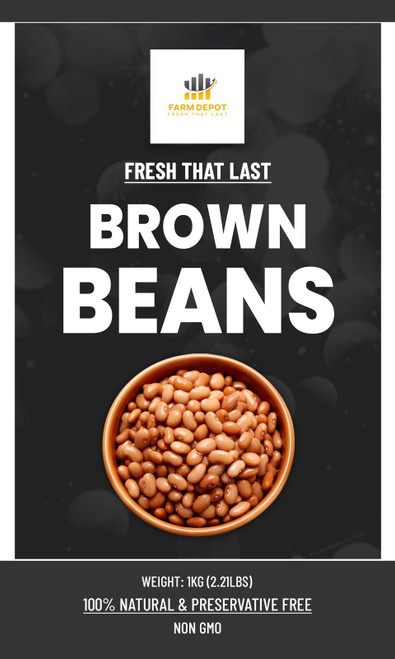
BROWN BEANS (Nigerian Common Brown)
Our Premium Nigerian Brown Beans are sourced from premium growing regions, carefully cleaned, and graded to ensure uniform size for even cooking. They represent the authentic taste of Nigerian cuisine and provide excellent value as a protein source for families. They are also valued for their rich, earthy flavor and assumed superior nutritional content compared to white varieties. These medium-sized, reddish-brown beans are a staple in Nigerian households, forming the base of countless traditional dishes from Ewa Agoyin (spicy bean stew) to Moin-Moin and Akara . Scientific analysis confirms that Nigerian brown beans are nutritionally analogous to French beans and soybeans, with seed coat color indicating varying levels of calcium, iron, and vitamin C. These beans cook to a tender yet firm texture, holding their shape well in stews while developing a rich, satisfying flavor.
Nutritional Components (Per 100g dry beans - typical values)
Energy: 330-340 kcal
Protein: 21-24g
Carbohydrates: 55-60g
Dietary Fiber: 15-20g
Fat: 1.5-2g
Ash: 3-4g
Calcium: Higher than white beans
Iron: Higher than white beans
Vitamin C: Present in higher amounts than white beans
Zinc: Present
Potassium: ~1400mg
Magnesium: ~180mg
Folate: ~300-400µg
Polyphenols: Higher content due to brown seed coat
Key Benefits: Preferred for richer nutrient profile compared to white beans, excellent source of plant protein and fiber, high iron content helps prevent anemia, antioxidants from brown seed coat support cellular health, low glycemic index, supports blood sugar regulation, versatile for all Nigerian bean dishes, cost-effective protein source for families.
Storage Instructions
Store in airtight containers in a cool, dry, dark place
Shelf life: 12-24 months when properly stored
Moisture control: Critical—keep below 14% moisture to prevent mold and aflatoxin
Pest management: Brown beans are susceptible to bean weevils (Callosobruchus maculatus )
Inspect monthly for signs of infestation (small holes in beans, powdery residue, live insects)
Temperature: Ideal storage at 15-20°C; higher temperatures accelerate pest reproduction
Natural pest control: Store with dried pepper pods, neem leaves, or bay leaves
For long-term storage (2+ years), freeze at -18°C for 48 hours before storing at room temperature to kill any eggs
Once opened, consume within 6-12 months for optimal cooking quality
Do not mix old and new stock—this spreads any existing infestation
If beans become hard during storage, add a pinch of baking soda during cooking to soften