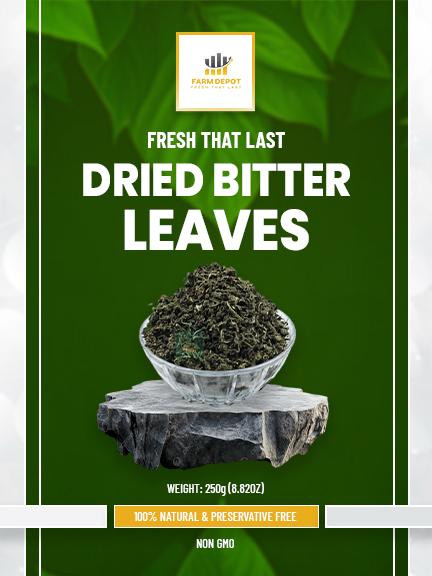
DRY BITTER LEAVES (Vernonia amygdalina - Onugbu)
Premium Dry Bitter Leaves (Onugbu in Igbo) are made from Vernonia amygdalina , a perennial shrub of the Asteraceae family that is arguably the most used medicinal plant in its genus across sub-Saharan Africa. These leaves are essential for preparing Bitterleaf Soup (Ofe Onugbu), a beloved delicacy in Igbo cuisine, and are valued throughout Nigeria for both culinary and therapeutic purposes.
Our bitter leaves undergo careful processing: harvested young leaves are washed multiple times to reduce bitterness (traditional "squeeze washing" with or without salt), then gently dried to preserve their nutritional and medicinal properties. The characteristic bitterness, which indicates the presence of bioactive compounds, is partially retained while becoming palatable for cooking.
Bitter leaf is renowned in traditional medicine for treating diabetes, malaria, fever, diarrhea, wounds, respiratory issues, and inflammatory conditions. Modern research has validated many of these uses, identifying potent antioxidant, anti-inflammatory, antimicrobial, and potential anticancer properties.
The leaves contain a complex array of bioactive compounds including alkaloids, flavonoids, saponins, tannins, terpenoids, and the sesquiterpene lactone vernodalin, which contribute to its characteristic bitter taste and therapeutic effects.
Nutritional Components (Per 100g dry leaves - based on fresh composition)
Energy: ~250-300 kcal
(Concentrated)
Moisture: <10%
(Removed by drying)
Protein: ~20-25%
(Good protein source)
Carbohydrates: ~40-50%
(Energy and fiber)
Dietary Fiber: ~20-30%
(Very high)
Fat: ~5-8%
(Low fat)
Ash: ~10-15%
(Mineral-rich)
Calcium: Very high
(Bone health)
Iron: Enhanced
(Blood health)
Magnesium: Enhanced
(Muscle/nerve function)
Phosphorus: Enhanced
(Energy metabolism)
Potassium: Enhanced
(Heart function)
Zinc: Enhanced
(Immune support)
Sodium: Present
(Electrolyte balance)
Copper: Present
(Metabolism)
Manganese: Present
(Antioxidant)
Vitamin A: Retained
(Vision/immune)
Vitamin C: Reduced by drying
(Immune support)
Vitamin E: Retained
(Antioxidant)
Thiamin (B1): Retained
(Energy metabolism)
Riboflavin (B2): Retained
(Cell healt
Niacin (B3): Retained
(Brain function)
Folate: Retained
(Cell growth)
Carotenoids: Partially retained
(Antioxidants)
Key Benefits: Exceptional antioxidant capacity from high flavonoid and phenolic content. Anti-inflammatory properties validated for conditions like arthritis and inflammatory bowel disease. Antimicrobial activity against bacterial and fungal pathogens. Digestive health benefits—stimulates enzyme secretion and reduces bloating. Potential anti-diabetic effects—traditionally used to manage blood sugar. May support cardiovascular health through lipid metabolism improvement. High mineral content supports blood production and prevents anemia. Contains compounds with potential anticancer properties.
Storage Instructions
Store in airtight, moisture-proof packaging in a cool, dry, dark place
Shelf life: 6-12 months when properly stored
Temperature: Room temperature (15-25°C); store at 4°C for maximum nutrient retention
Humidity: Keep below 60% relative humidity—moisture causes rapid spoilage
Light protection: Essential—light degrades vitamins and phytochemicals
Processing note: Traditional squeeze washing before drying reduces anti-nutritional factors and bitterness while preserving benefits
Packaging: Typically sold in plastic bags or bulk for export
Signs of spoilage: Musty or fermented odor (beyond natural bitterness), visible mold, color change from green to brown/black, or moisture in packaging
Usage: Rehydrate in warm water; can be boiled briefly to further reduce bitterness if desired; use in Bitterleaf Soup or as vegetable in stews