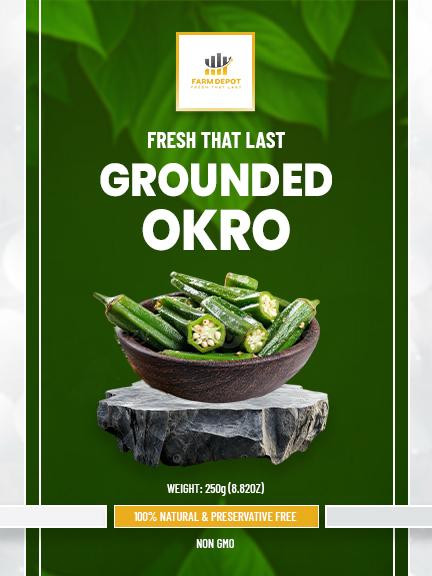
DRY OKRO/OKRA (Abelmoschus esculentus)
Our Premium Dry Okro is harvested at peak tenderness (3-5 days after flowering), washed, trimmed, and sliced into uniform pieces before gentle dehydration. Drying okra preserves its nutritional density while eliminating the perishability that limits fresh okra to 2-3 days of storage. When properly dried, okra becomes hard and brittle, with a long shelf life and the ability to rehydrate quickly in cooking. The distinctive mucilage (slime) that makes okra valuable as a soup thickener is retained in the dried product and reactivates upon rehydration.
Okra is a functional food superstar, containing 35 identified active compounds including 16 flavonoids and 12 polysaccharides with demonstrated antioxidant, anti-fatigue, blood sugar-lowering, neuroprotective, and immunomodulatory properties. It is particularly valued in Nigerian cuisine for Okra Soup (Ila), where its thickening properties create the characteristic silky texture.
Our drying process uses controlled temperature (60°C) to preserve heat-sensitive nutrients while ensuring complete moisture removal for food safety.
Nutritional Components (Per 100g dry okra)
Energy: ~300-350 kcal
(Concentrated 10x)
Water: <10%
(Removed by drying)
Carbohydrates: ~60-70g
(Fiber and mucilage)
Protein: ~15-20g
(Good vegetable protein)
Fat: ~1-2g
(Very low fat)
Dietary Fiber: ~25-30g
(Exceptionally high)
Sugars: ~15g
(Natural sugars)
Ash: ~8-10g
(Mineral concentrate)
Potassium: ~2500-3000mg
(Very high)
Calcium: ~700-800mg
(Good source)
Phosphorus: ~550-600mg
(Energy metabolism)
Magnesium: ~500mg
(Muscle/nerve function)
Manganese: ~8-9mg
(Antioxidant function)
Iron: ~5-6mg
(Blood health)
Zinc: ~5mg
(Immune support)
Copper: ~1mg
(Metabolism)
Selenium: ~10µg
(Antioxidant)
Vitamin C: Partially retained
(Reduced by drying)
Thiamin (B1): Retained
(Energy metabolism)
Vitamin B6: Retained
(Brain function)
Folate: ~800µg
(Very high)
Vitamin A: Retained
(Vision)
Vitamin K: Retained
(Blood clotting)
Mucilage/Pectin: Retained
(Thickening agent)
Flavonoids: Retained
(Antioxidants)
Polysaccharides: Retained
(Bioactive)
Quercetin: Retained
(Antioxidant)
Catechins: Retained
(Antioxidant)
Epicatechins: Retained
(Antioxidant)
Key Benefits: Exceptional mucilage content provides natural thickening for soups without added starch. Very high dietary fiber (25-30% dry weight) supports digestive health and blood sugar regulation. Rich in flavonoids (16 identified) with antioxidant, anti-inflammatory properties. Contains unique polysaccharides with immunomodulatory and neuroprotective effects. High folate content supports pregnancy and cell growth. Good source of vegetable protein for muscle maintenance. Low glycemic index helps manage diabetes. Antioxidant capacity helps combat fatigue and support liver health.
Storage Instructions
Store in airtight, moisture-proof containers in a cool, dry, dark place
Shelf life: 6-12 months at room temperature; up to 24 months if vacuum-sealed
Temperature: Room temperature (15-25°C); for maximum retention of phytochemicals, freezing is superior to air-drying
Humidity: Keep below 50% relative humidity—okra is hygroscopic and absorbs moisture readily
Light protection: Store in dark place or opaque containers—light degrades chlorophyll and vitamins
Air exposure: Minimize—oxygen causes oxidation of sensitive compounds; vacuum sealing recommended for long-term storage
Container: Glass jars with tight lids, vacuum-sealed bags, or moisture-vapor-proof containers
Conditioning: After drying, condition by storing loosely in jars for one week, checking daily for condensation; if moisture appears, return to dehydrator
Signs of spoilage: Musty odor, visible mold, softening (should be hard and brittle), or off-colors
Usage: Rehydrate in hot water for 20-30 minutes before cooking, or add directly to soups/stews where they will rehydrate during cooking
Note: The mucilage (slime) is retained in dried okra and will reactivate when rehydrated—this is desirable for thickening soups