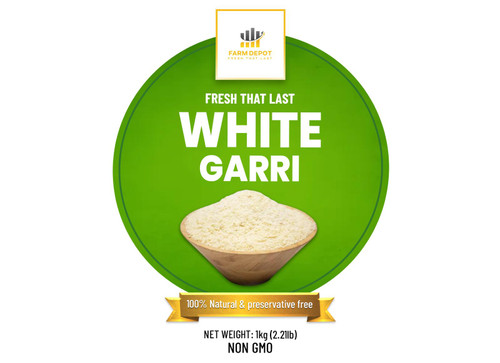
WHITE GARRI (Plain Fermented Cassava Granules)
Authentic White Garri is made from cassava tubers through a process of peeling, washing, grating, fermentation (3-5 days), dewatering, and dry-roasting without any oil addition. This produces the characteristic creamy-white, free-flowing granular flour with a slightly sour taste and acidic pH.
This versatile food can be consumed in multiple ways: as a cold snack soaked in water with groundnuts and sugar (garri soakings ), as a hot meal prepared as eba (dough) eaten with soups, or as a breakfast porridge. Its affordability, long shelf life, and ease of preparation make it a crucial food security item for everyone.
Nutritional Components (Per 100g dry white garri)
Energy: 380-400 kcal
Carbohydrates: 85-90g
Dietary Fiber: 3-5g
Protein: 1-2g
Fat: <1g
Moisture: 15.74±0.23%
Ash: 1-2g
Vitamin A: Minimal
Vitamin C: Trace
B Vitamins: Trace
Potassium: Present
Magnesium: Present
Residual Cyanide: <10 mg/kg
Key Benefits: Extremely low fat content (<1%) ideal for low-fat diets. Good source of carbohydrates for quick energy. Fermentation improves digestibility and reduces anti-nutritional factors. Contains dietary fiber (3-5g) for digestive health. Low to medium glycemic index provides sustained energy. Naturally gluten-free and grain-free. Most affordable staple food option. Long shelf life makes it ideal for food storage and security.
Storage Instructions
Store in airtight, moisture-proof containers in a cool, dry, dark place
Shelf life: 12-24 months when properly stored; up to 14+ months with hygienic handling and preservatives
Packaging: Plastic containers or polythene bags are superior to paper or jute bags for maintaining quality
Temperature: Room temperature (15-30°C); avoid heat sources
Moisture critical: Higher moisture content (15.74%) than yellow garri makes white garri more susceptible to mold—ensure proper drying before storage
Humidity: Store in low humidity environment; moisture causes rapid deterioration
Light: Store in dark place to prevent quality degradation
Pest protection: Protect against molds (Aspergillus, Penicillium, Fusarium, Rhizopus), insects, and mites
Signs of spoilage: Musty or moldy odor, visible mold growth, clumping, sour smell beyond normal fermentation, color changes
Quality maintenance: Proper drying during frying to reduce moisture is essential for long shelf life.
Hygienic handling: Use clean, dry utensils to prevent contamination