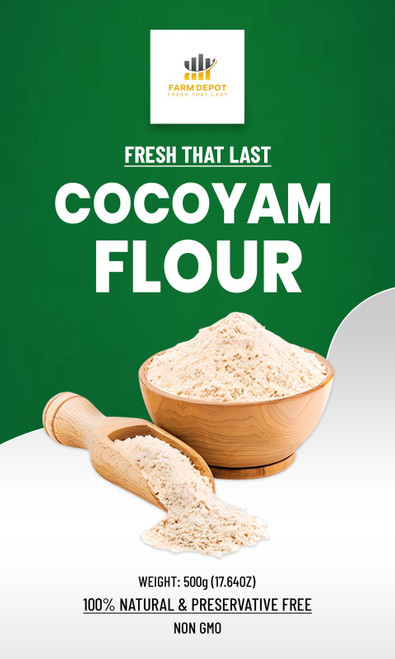
COCOYAM FLOUR
Cocoyam flour is a fine, gluten-free flour made from the corms of the cocoyam/taro plant (Colocasia esculenta), a tropical root crop widely cultivated in West Africa, Asia, and the Caribbean. It has a slightly earthy, nutty flavor and smooth texture. In Nigerian cuisine, cocoyam flour is primarily used to make "fufu" — a starchy side dish eaten with soups — and can also be used in baking, pancakes, and as a thickener. It is an excellent alternative for those with gluten intolerance or celiac disease and is particularly valued for its digestibility and energy content.
Nutritional Components (per 100g)
Calories: 112–372 kcal
Protein: 1.5–6.7g
Carbohydrates: 14–85g
Fat: 0.2–1.2g
Dietary Fiber: 1–5g
Ash: 2–7%
Potassium: 350–2,525mg
Calcium: 31.7–120mg
Magnesium: 79–269mg
Phosphorus: 111–397mg
Iron: 7.3–20.7mg
Zinc: 17–62mg
Manganese: 0.65–13.2mg
Sodium: 20–30mg
Vitamin C: 2.4mg
Vitamin B-Complex: Present
Cocoyam is a significant source of energy, potassium, and dietary fiber. It contains more vitamin B-complex than whole milk and is one of the few non-animal sources of zinc. The high potassium content supports cardiovascular health.
Storage Instructions
Shelf Life: 6–12 months at room temperature; up to 2 years when properly processed and stored
Method: Store in airtight containers in a cool, dry, odorless environment away from direct sunlight
Extended Storage: Refrigeration or freezing significantly extends shelf life and preserves nutritional quality
Precautions: Processing method (fermentation vs. parboiling) affects storage stability. Higher storage temperatures (above 35°C/95°F) accelerate quality degradation. Monitor for changes in color, taste, and texture over time
Signs of Spoilage: Off-flavors, discoloration, increased moisture absorption, or pest infestation. Changes in pasting properties (thickening ability) indicate quality loss