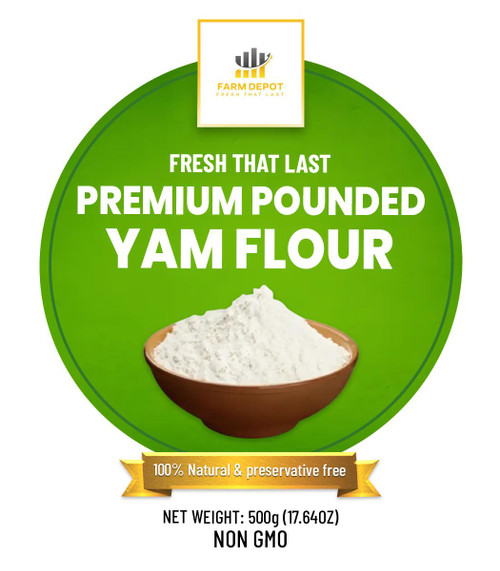
YAM TUBER
Our Premium Yams are carefully harvested at full physiological maturity (8–11 months after planting) to ensure optimal starch content, firm texture, and rich, earthy flavor. Each tuber features a rough, bark-like brown skin with creamy white to pale yellow flesh. When cooked, yam delivers a smooth, slightly sweet taste with a satisfying, fluffy texture—perfect for boiling, pounding, frying, roasting, or preparing into pounded yam (iyan), yam porridge, and fried yam (dundun).
Culinary Uses: Boiling, pounding, frying, roasting, baking, and incorporation into soups and stews.
Nutritional Components (Per 100g Raw, Approximate)
Calories: ~118 kcal
Total Carbohydrates: ~28–30 g
— Dietary Fiber: ~4 g
— Starch: ~23–25 g
— Sugars: ~0.5 g
Protein: ~1.5–2 g
Total Fat: ~0.2 g
— Saturated Fat: 0 g
Sodium: ~5 mg
Potassium: ~816 mg
Vitamin C: ~17 mg
Vitamin B6: ~0.3 mg
Manganese: ~0.4 mg
Copper: ~0.2 mg
Magnesium: ~21 mg
Calcium: ~17 mg
Iron: ~0.5 mg
Phosphorus: ~55 mg
Key Nutritional Benefits:
High in Complex Carbohydrates: Provides sustained energy release.
Rich in Resistant Starch: Supports digestive health and blood sugar management.
Good Source of Dietary Fiber: Promotes bowel regularity and satiety.
Contains Essential Minerals: Particularly potassium, copper, and manganese.
Low in Fat & Sodium: Heart-healthy staple food.
Gluten-Free: Suitable for celiac and gluten-sensitive diets.
Storage Instructions
Store in a cool, dry, well-ventilated area away from direct sunlight.
Important Storage Guidelines:
Inspect Before Storage: Only store sound, unbruised tubers free from cuts, rot, or insect damage. Injured tubers should be consumed immediately.
Ventilation is Critical: Ensure adequate air circulation to remove heat generated by tuber respiration and prevent moisture buildup.
Avoid Direct Sunlight & Rain: Store in a shaded structure (e.g., yam barn, ventilated shed) protected from weather elements.
Regular Inspection: Check tubers every 2–3 weeks. Remove any tubers showing signs of sprouting, softening, or rot immediately to prevent spread.
Sprout Management: Remove sprouts as they appear to extend storage life and preserve quality.
Do Not Refrigerate below 10°C: Cold temperatures below 10°C can cause chilling injury, leading to internal browning and tissue breakdown.
Keep Away from Ethylene-Producing Fruits: Store separately from apples, bananas, and tomatoes to avoid premature sprouting.
Signs of Spoilage:
Soft or mushy spots
Dark discoloration or mold
Foul or fermented odor
Excessive sprouting
Shriveling or excessive weight loss